
Hastelloy Flanges
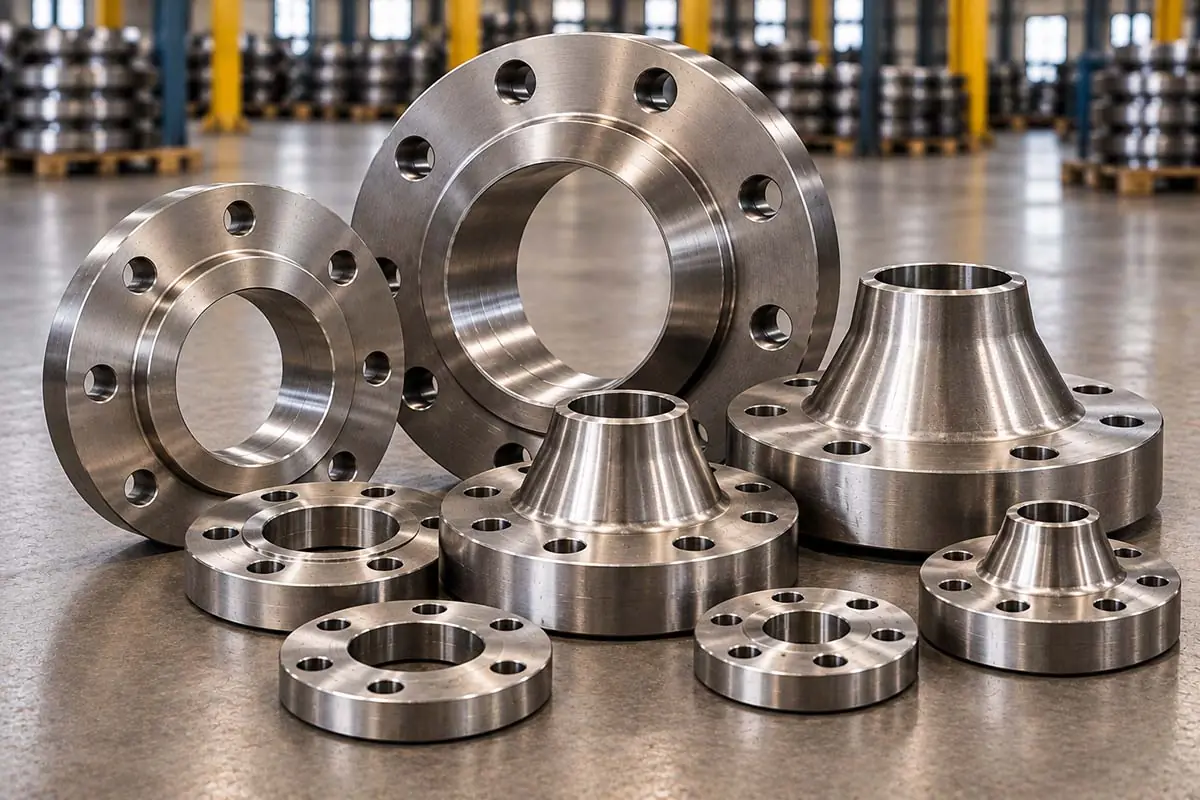
Giriraj Impex is a manufacturer, stockist, supplier and exporter of Hastelloy flanges in alloys C276 (UNS N10276) and C22 (UNS N06022), with B2, B3 and other nickel alloys on request. We manufacture Hastelloy flanges from forgings to ASTM B564 / ASME SB564, to ASME B16.5 from ½" to 24" NB in Class 150 to 2500, ASME B16.47 Series A and B and EN 1092-1, in weld neck, slip-on, blind, socket weld, threaded, lap joint and orifice types.
Hastelloy flanges complete piping and equipment for hot acids, wet chlorine, hypochlorite and chloride-rich streams in chemical, pharmaceutical, pulp and paper and pollution-control plants, giving the flanged joint the same corrosion resistance as the Hastelloy pipe and vessel it connects.
Specifications
| Item | Details |
|---|---|
| Material standard | ASTM B564 / ASME SB564 (nickel alloy forgings) |
| Alloys | C276 (N10276), C22 (N06022); B2, B3 and others on request |
| Dimensional standards | ASME B16.5, B16.47 Series A and B, B16.36, B16.48, EN 1092-1 |
| Sizes | ½" to 24" NB (B16.5); 26" to 60" NB (B16.47) |
| Classes | 150, 300, 600, 900, 1500, 2500 |
| Facings | Raised face, flat face, ring type joint |
| Condition | Solution annealed |
| Documents | Mill test certificate (MTC); third-party inspection on request |
Composition
| Alloy | Ni | Cr | Mo | Fe | W | Co | C | Si | Mn | V |
|---|---|---|---|---|---|---|---|---|---|---|
| C276 (N10276) | Balance | 14.5–16.5 | 15.0–17.0 | 4.0–7.0 | 3.0–4.5 | 2.5 | 0.010 | 0.08 | 1.00 | 0.35 |
| C22 (N06022) | Balance | 20.0–22.5 | 12.5–14.5 | 2.0–6.0 | 2.5–3.5 | 2.5 | 0.015 | 0.08 | 0.50 | 0.35 |
Phosphorus and sulphur limits as given in the standards.
C276 is the usual flange alloy for reducing acids and chlorides, and C22 for oxidising and mixed media; the flange alloy should match the pipe and equipment it connects.
Flange types
- Weld neck flanges – for pressure and cyclic service.
- Blind flanges – to close nozzles, manways and line ends.
- Slip-on flanges and socket weld flanges where permitted.
- Lap joint flanges with Hastelloy stub ends and stainless or carbon steel backing flanges.
- Orifice and reducing flanges, and spectacle blinds.
Cost-effective flange arrangements
Because Hastelloy is a high-cost alloy, piping designers often limit it to the wetted surfaces. Three common arrangements are used. Solid Hastelloy flanges give full corrosion resistance everywhere, including the outside, which matters where the external environment is also aggressive. Lap joint flanges use a Hastelloy stub end for the wetted face with a backing flange in a less expensive material, which also eases bolt-hole alignment. For large or heavy flanges on vessel nozzles, carbon steel flanges with Hastelloy weld overlay on the face and bore are used. The piping or vessel specification states which arrangement applies.
Manufacturing and inspection
Hastelloy flanges are machined from solution-annealed B564 forgings. Machining uses sharp tools and low speeds because the alloys work-harden. Each flange is dimensionally inspected and marked with the manufacturer's identification, alloy and specification, size, class, bore schedule and heat number. Ultrasonic testing, liquid penetrant examination, intergranular corrosion testing and third-party inspection can be added, and flanges can be supplied to NACE MR0175 / ISO 15156 on request.
Bolting and gaskets
In aggressive environments where process spills or vapours reach the outside of the joint, Hastelloy studs and nuts are used so that the bolting does not become the weak point; elsewhere, high-strength alloy or stainless bolting may be acceptable. PTFE-based gaskets are common for acid service, and spiral wound gaskets with alloy windings for higher temperature and pressure. See Hastelloy fasteners.
Ordering
Please state the flange type, standard, size, class, facing, bore schedule, alloy and UNS number, quantity and any supplementary tests or inspection required.
Pressure ratings and design
ASME B16.5 includes nickel-chromium-molybdenum alloy forgings such as C276 in its material groups, with pressure-temperature ratings for each class. C276 has higher strength than austenitic stainless steel, so its ratings in a given class are comparatively high at moderate temperatures. Designers should take the ratings from the B16.5 table for the actual material group and design temperature, and allow for the joint's gasket and bolting. For lined or overlaid flanges, the rating is based on the backing material, while the alloy layer provides the corrosion resistance; the flange drawing and inspection plan should show the overlay thickness and testing.
Applications and related products
Hastelloy flanges are used in chemical and pharmaceutical reactors and piping, acid and chlorine plants, pulp bleaching, flue gas desulphurisation, waste incineration and sour-gas service. They connect Hastelloy pipes and tubes and Hastelloy pipe fittings. Flanges and blinds can also be machined from Hastelloy plates and Hastelloy round bars where the specification allows. See all flange materials on the flanges page and alloy guidance on the Hastelloy page.
Frequently Asked Questions
ASTM B564 (ASME SB564) covers nickel alloy forgings, including Hastelloy C276 and C22 flanges. Dimensions follow ASME B16.5, B16.47 or EN 1092-1.
C276 is the most common, for reducing acids and chlorides; C22 is chosen for oxidising and mixed media. The flange alloy normally matches the pipe and equipment.
Yes. A Hastelloy stub end with a stainless or carbon steel backing flange reduces cost where only the wetted face needs the alloy and the outside environment is mild.
Where the outside of the joint is exposed to aggressive media, Hastelloy studs and nuts are used. Elsewhere, the piping specification may allow alloy or stainless bolting.
Yes. Flanges are machined from solution-annealed B564 forgings, giving full corrosion resistance.
Yes. Flanges above 24" NB are supplied to ASME B16.47 Series A or B, or to drawings, and weld-overlaid carbon steel flanges are an option for large nozzles.
Request a Quote for Hastelloy Flanges
Tell us the product, grade, size, standard, quantity and delivery location, and our sales team will reply with a quotation.
Hastelloy® is a trademark of Haynes International.