
ASTM A516 Grade 70 Plates
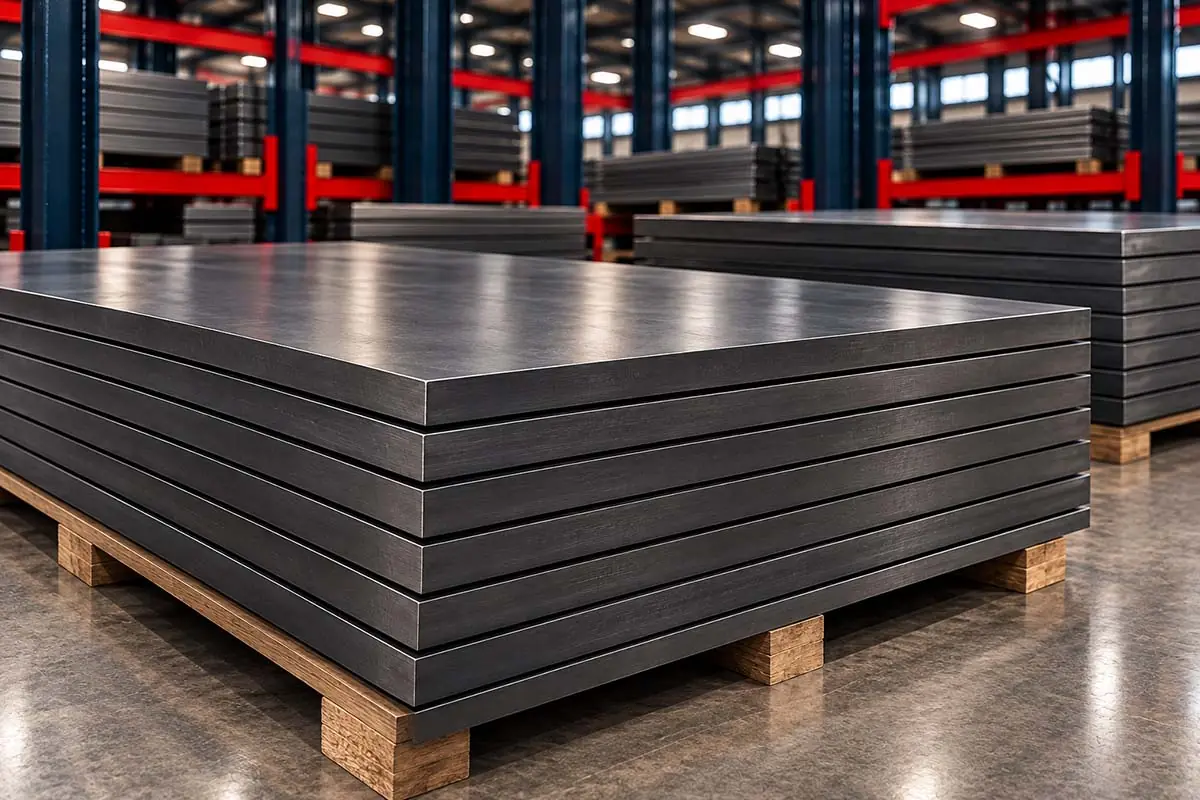
Giriraj Impex stocks, supplies and exports ASTM A516 Grade 70 plate – carbon steel pressure vessel plate to ASTM A516 / ASME SA516 Grade 70 for moderate and lower temperature service. We supply A516 Grade 70 plates from approved mills, as rolled or normalised, in a wide range of thicknesses, with impact testing, ultrasonic testing and HIC testing on request, and with mill test certificates.
A516 Grade 70 is the most widely used plate for pressure vessels, boilers, heat exchangers and storage tanks in refineries, petrochemical and fertiliser plants, power stations and oil and gas facilities.
Specifications
| Item | Details |
|---|---|
| Standard | ASTM A516 / ASME SA516, Grade 70; general requirements ASTM A20 |
| Condition | As rolled, or normalised (required above 40 mm thickness, and on request for thinner plates) |
| Thickness and size | As the mill range allows; cut to size on request |
| Supplementary requirements | Charpy impact test (S5), simulated post-weld heat treatment (S3), ultrasonic test (A435 / A578), HIC test (TM0284 method), NACE MR0175 / ISO 15156 – on request |
| Documents | Mill test certificate (MTC); third-party inspection on request |
Chemical composition
| Thickness | C | Mn | P | S | Si |
|---|---|---|---|---|---|
| Up to 12.5 mm | 0.27 | 0.85–1.20 | 0.025 | 0.025 | 0.15–0.40 |
| Over 12.5 to 50 mm | 0.28 | 0.85–1.20 | 0.025 | 0.025 | 0.15–0.40 |
| Over 50 to 100 mm | 0.30 | 0.85–1.20 | 0.025 | 0.025 | 0.15–0.40 |
| Over 100 mm | 0.31 | 0.85–1.20 | 0.025 | 0.025 | 0.15–0.40 |
Copper, nickel, chromium and molybdenum limits, and the manganese allowance for lower carbon, are as given in ASTM A516 and A20. Actual values for each heat are on the mill test certificate.
Mechanical properties
| Grade | Tensile strength, MPa (ksi) | Yield strength min, MPa (ksi) |
|---|---|---|
| Grade 60 | 415–550 (60–80) | 220 (32) |
| Grade 65 | 450–585 (65–85) | 240 (35) |
| Grade 70 | 485–620 (70–90) | 260 (38) |
Chemical composition limits (carbon and manganese vary with plate thickness) and elongation requirements are as given in the standard.
Grade 70 has the highest strength of the A516 grades, allowing thinner walls than Grades 60 and 65 for the same design pressure.
Normalised plate and impact testing
ASTM A516 requires plates over 40 mm thick to be normalised, and many vessel specifications require normalising for all thicknesses. Normalising refines the grain and improves toughness, which is needed for impact testing at low design temperatures. Where the vessel's minimum design metal temperature requires it, plates are ordered with supplementary requirement S5 – Charpy impact testing at the specified temperature. Simulated post-weld heat treatment (S3) confirms that the plate still meets its properties after the fabricator's PWHT.
For vessels designed to ASME Section VIII, the minimum design metal temperature and the governing thickness determine whether impact testing is required, using the material curves in the code. Normalised A516 Grade 70 is placed on a more favourable curve than as-rolled plate, which often allows lower design temperatures without impact testing. Fabricators should check the code rules for each vessel before ordering, and state the result in the plate enquiry.
Sour service and HIC-tested plate
For vessels in wet hydrogen sulphide service, A516 Grade 70 plate is ordered with low sulphur and controlled chemistry, normalised, and tested for hydrogen-induced cracking (HIC) to test method TM0284, with acceptance criteria set by the project specification. Plates can be supplied to NACE MR0175 / ISO 15156 on request. Ultrasonic testing to ASTM A435 or A578 is usually added to check for laminations.
Fabrication
A516 Grade 70 has good weldability with low-hydrogen consumables. Thicker plates may need preheat depending on carbon equivalent and restraint, and vessels are post-weld heat treated where the design code requires it. Plates are cut by oxy-fuel or plasma and rolled cold or hot into shells; hot forming may require renormalising.
Ordering A516 Grade 70 plates
Please give the grade, condition, thickness, width and length or cut sizes, quantity and any supplementary requirements – impact test temperature, simulated PWHT cycle, ultrasonic testing, HIC testing or third-party inspection. Plates are marked by the mill with specification, grade, heat and slab number and dimensions.
Applications and related products
A516 Grade 70 plates are used for pressure vessels, separators, columns, reactors, heat-exchanger shells and channels, boiler drums, storage tanks and spheres, and plate fittings and flanges. Other carbon steel plates are on the carbon steel plates page and all materials on the plates page. Grade guidance is on the carbon steel page.
Frequently Asked Questions
ASTM A516 Grade 70 is a carbon steel plate for pressure vessels in moderate and lower temperature service, with a tensile strength of 485–620 MPa and minimum yield of 260 MPa.
SA516 is the ASME Boiler and Pressure Vessel Code adoption of ASTM A516, with the same requirements. Plates are normally certified to both.
ASTM A516 requires normalising for plates over 40 mm thick; many specifications require it for all thicknesses, especially with impact testing.
It is plate with controlled chemistry tested for hydrogen-induced cracking to test method TM0284, for vessels in wet hydrogen sulphide service.
Grade 70 has higher minimum strength, allowing thinner walls. Grade 60 has slightly better toughness and formability.
Yes. Charpy impact testing at the specified temperature can be ordered as supplementary requirement S5.
Request a Quote for ASTM A516 Grade 70 Plates
Tell us the product, grade, size, standard, quantity and delivery location, and our sales team will reply with a quotation.