
Alloy Steel Plates
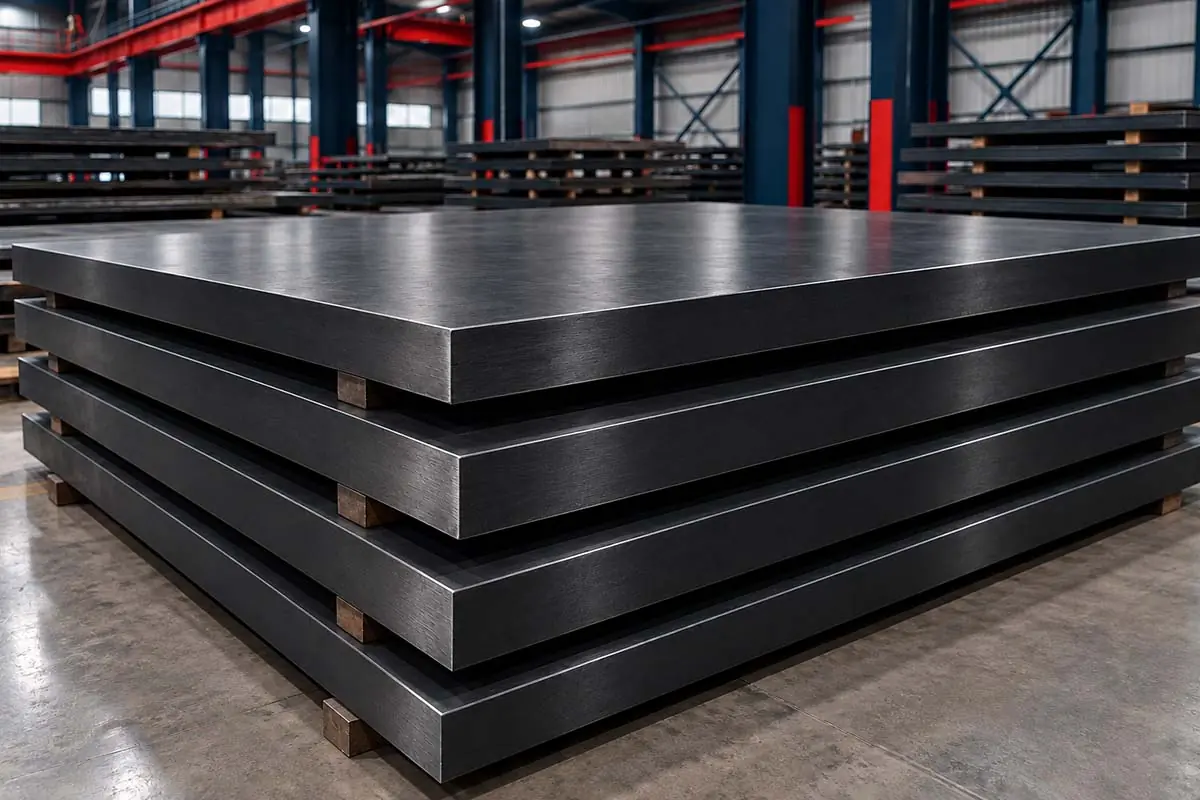
Giriraj Impex stocks, supplies and exports alloy steel plates to ASTM A387 / ASME SA387 – chromium-molybdenum pressure vessel plates in Grade 11, 12, 22, 5, 9 and 91, Class 1 and Class 2 – and carbon-molybdenum plates to ASTM A204 Grade A, B and C. We supply alloy steel plates from approved mills, normalised and tempered or quenched and tempered as the grade requires, with mill test certificates.
Alloy steel plates are used for boilers, pressure vessels, reactors, heat exchangers and piping components that operate at high temperatures, where carbon steel would lose strength and suffer from creep, graphitisation or hydrogen attack.
Specifications
| Item | Details |
|---|---|
| Chromium-molybdenum plate | ASTM A387 / ASME SA387 Grade 11 (1¼Cr-½Mo), 12 (1Cr-½Mo), 22 (2¼Cr-1Mo), 5 (5Cr-½Mo), 9 (9Cr-1Mo), 91 (9Cr-1Mo-V); Class 1 and Class 2 |
| Carbon-molybdenum plate | ASTM A204 / ASME SA204 Grade A, B, C |
| Heat treatment | Normalised and tempered, or quenched and tempered where permitted |
| Thickness and size | Plate thicknesses and sizes as the mill range allows; cut to size on request |
| Optional tests | Ultrasonic test (ASTM A435 / A578), simulated post-weld heat treatment, impact test, step-cooling test |
| Documents | Mill test certificate (MTC); third-party inspection on request |
Chemical composition – A387 Grade 11 and 22
| Grade | C | Mn | P | S | Si | Cr | Mo |
|---|---|---|---|---|---|---|---|
| Grade 11 | 0.05–0.17 | 0.40–0.65 | 0.025 | 0.025 | 0.50–0.80 | 1.00–1.50 | 0.45–0.65 |
| Grade 22 | 0.05–0.15 | 0.30–0.60 | 0.025 | 0.025 | 0.50 | 2.00–2.50 | 0.90–1.10 |
Mechanical properties – Class 1 and Class 2
| Grade and class | Tensile strength, MPa (ksi) | Yield strength min, MPa (ksi) |
|---|---|---|
| Grade 11 Class 1 | 415–585 (60–85) | 240 (35) |
| Grade 11 Class 2 | 515–690 (75–100) | 310 (45) |
| Grade 22 Class 1 | 415–585 (60–85) | 205 (30) |
| Grade 22 Class 2 | 515–690 (75–100) | 310 (45) |
Class 2 plates have higher strength, which allows thinner walls for the same design pressure. Elongation and the requirements for other grades are given in ASTM A387, and the results for each plate on the mill test certificate.
Choosing the grade
A204 carbon-molybdenum plate is used for moderate-temperature vessels and boiler parts where a little more strength than carbon steel is needed. Grade 11 and 12 are the common choice for vessels and heat exchangers in refinery and petrochemical units up to around 550 °C. Grade 22, with 2¼% chromium and 1% molybdenum, gives better creep strength and resistance to high-temperature hydrogen attack, and is the standard material for hydroprocessing reactors, high-pressure separators and power boiler components. Grade 5 and 9 are used for higher temperatures and sulphur-bearing hydrocarbons, and Grade 91, with vanadium and niobium, for the highest creep strength in modern power plant headers and steam piping. The choice depends on design temperature, hydrogen partial pressure and the applicable design code.
High-temperature hydrogen attack is a key factor in refinery reactors and separators. At elevated temperature and hydrogen partial pressure, hydrogen can react with carbides in carbon and low-alloy steel, causing internal fissuring and loss of strength. Chromium and molybdenum stabilise the carbides, which is why Grade 22 and higher alloys are selected for hydrogen service using the industry operating-limit curves. Temper embrittlement is the other concern for Grade 22 in long service between about 350 °C and 575 °C; it is controlled by limiting impurity elements such as phosphorus, tin, antimony and arsenic, which is why reactor plate is often ordered with restricted impurity levels and step-cooling tests.
Testing for critical equipment
Reactors and heavy-wall vessels in alloy steel are often ordered with supplementary tests. Ultrasonic testing to ASTM A435 or A578 checks for laminations. Simulated post-weld heat treatment (PWHT) of test coupons confirms that the plate still meets its properties after the fabricator's heat treatment. Impact testing confirms toughness, and for Grade 22 in hydroprocessing service a step-cooling test is used to assess susceptibility to temper embrittlement. Please list any of these requirements with the enquiry, along with the PWHT cycle the fabricator will use.
Fabrication
Chromium-molybdenum plates need controlled welding procedures. Preheat and interpass temperatures are maintained to prevent hydrogen cracking, matching low-hydrogen consumables are used, and welds are post-weld heat treated to temper the heat-affected zone and relieve stresses. Hot forming may require re-heat treatment of the formed part. The fabricator's welding and heat-treatment procedures should be qualified to the design code before production.
Ordering alloy steel plates
Please give the specification, grade and class, thickness, width and length or cut size, quantity, heat-treatment condition and any supplementary testing or inspection. Plates are marked by the mill with specification, grade, class, heat and slab number and dimensions, and each plate is traceable to its mill test certificate.
Applications and related products
Alloy steel plates are used for boiler drums and headers, hydroprocessing and reforming reactors, high-temperature pressure vessels and separators, heat-exchanger shells and channels, tube sheets, and fittings made from plate. Matching products include alloy steel pipes and tubes, alloy steel flanges, alloy steel pipe fittings, alloy steel fasteners and alloy steel round bars. Other plate materials are on the plates page, and grade guidance on the alloy steel page.
Frequently Asked Questions
ASTM A387 covers chromium-molybdenum alloy steel plates for boilers and pressure vessels designed for elevated-temperature service, in grades from 1Cr-½Mo to 9Cr-1Mo-V.
Class 2 plates have higher tensile and yield strength than Class 1 of the same grade, achieved through heat treatment, which allows thinner walls.
Grade 22 (2¼Cr-1Mo) is used for hydroprocessing reactors, high-pressure separators and boiler components because of its creep strength and resistance to high-temperature hydrogen attack.
Grade 11 is a 1¼Cr-½Mo steel plate used for pressure vessels, heat exchangers and boiler parts in refinery and petrochemical service at elevated temperatures.
Yes, chromium-molybdenum plates are normally post-weld heat treated, and simulated PWHT testing of the plate is often specified to confirm properties.
ASTM A204 covers carbon-molybdenum alloy steel plates (Grades A, B and C) for boilers and pressure vessels at moderate elevated temperatures.
Request a Quote for Alloy Steel Plates
Tell us the product, grade, size, standard, quantity and delivery location, and our sales team will reply with a quotation.